Louisiana Attorney General News V2
AG Article Full View
Source: https://www.ag.state.la.us/Article/253
| id | cleanPostDate | title |
| 253 | 2025-03-22 | State of Louisiana defends 2024 Congressional Map at Supreme Court, which added a Second Majority-Black District |
State of Louisiana Defends 2024 Congressional Map, which added a Second Majority-Black District Supreme Court of the United States: State of Louisiana V. Phillip Callais, ET AL. March 24, 2025 – 9:00 a.m. Timeline:
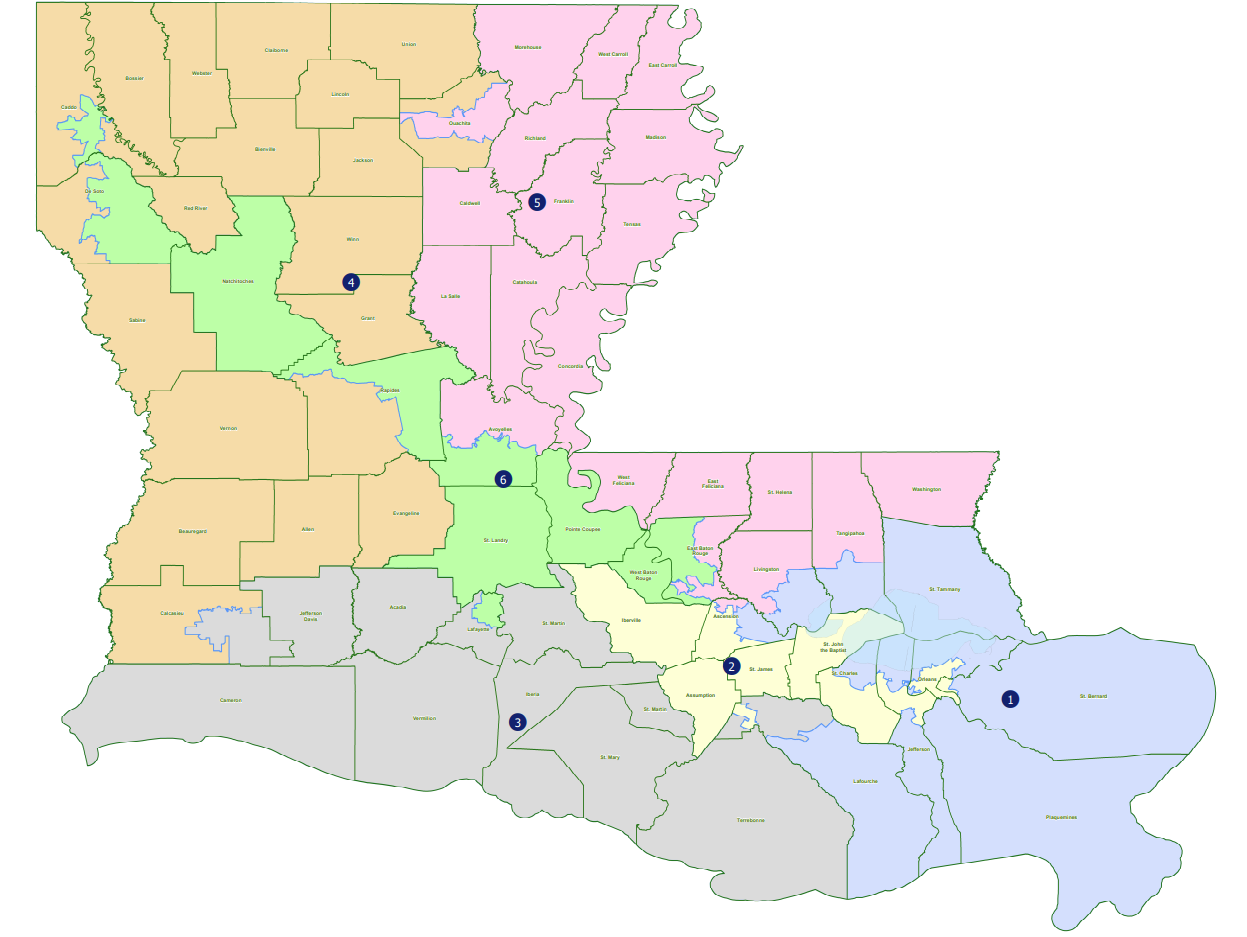
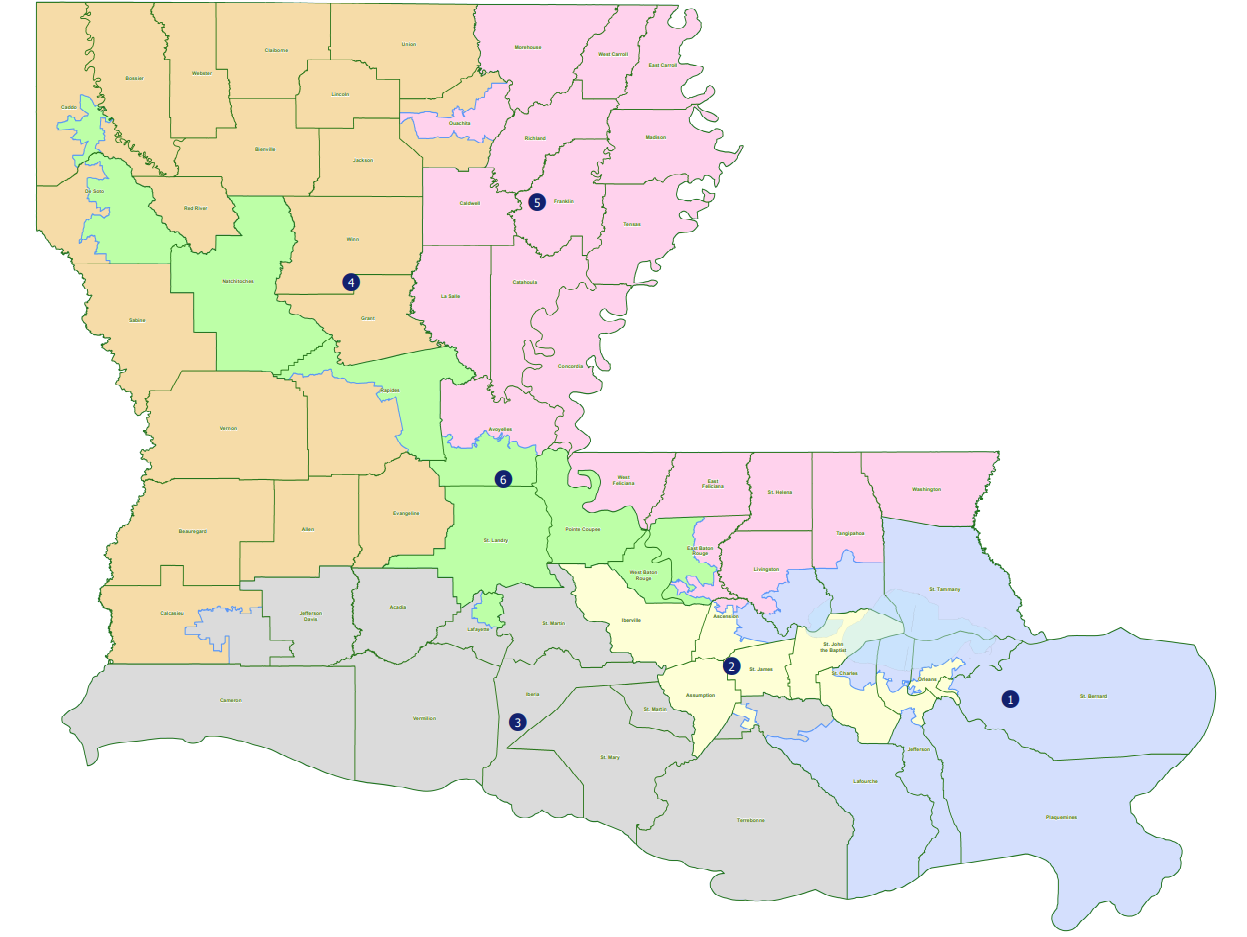
“I urge the Supreme Court to uphold Louisiana’s map and provide clarity to states that, like Louisiana, are forced into endless litigation every time a new census requires redistricting. The Supreme Court needs to provide instructions to state legislatures so states are not on a perpetual federal litigation roller coaster over good faith efforts at redistricting. It’s very confusing to voters, it’s expensive for taxpayers, and it’s inconsistent with the Constitution. We look forward to defending Louisiana’s new Congressional map and proving these points in front of the Supreme Court.” – Attorney General Liz Murrill The divvying up of Americans by race is a stain on our Nation’s history. It should be a disgraced relic of the past. Regrettably, however, this Court’s voting cases force the sovereign States to continue that vile practice today—penalizing States both when they consider race too little and when they consider race too much, all in the name of enforcing our “color-blind” Constitution. So life goes across the Nation and in Louisiana. Happily, Louisiana today is nothing like Plessy’s Louisiana. Yet, the cruel irony is that Louisiana today is not just permitted (as the Plessy majority believed) to sort its citizens based on the color of their skin—it is required to do so, at least to some unspecified degree. That is why Louisiana arrives here unhappily The facts of this “impossible” case are familiar. The Middle District of Louisiana held—and the Fifth Circuit affirmed—that Louisiana likely violated Section 2 of the Voting Rights Act (VRA) by failing to create a second majority-Black district. Louisiana thus created a second majority-Black district. But, within a matter of weeks, the Western District of Louisiana enjoined the new majority-Black district as an unconstitutional racial gerrymander. What now? There is no question that Louisiana should prevail here. The Court can hold as much on standing grounds. (How do self-described “non-African American voters” have Article III standing to challenge the 2 allegedly unconstitutional sorting of Black voters?) Or, the Court can simply reverse on the merits, reaffirming its promise not to leave “‘state legislatures too little breathing room’” between the competing demands of the VRA and the Equal Protection Clause. Either way, Louisiana prevails. But nobody truly wins in this “sordid business” of “divvying us up by race.” And if Louisiana were to lose on these facts, that would underscore the injustice of forcing States to run an endless “legal obstacle course,” lined with “notoriously unclear and confusing” precedents. More than any before it, therefore, this case presents a compelling opportunity for the Court to “call home”—“to alter its course”—rather than “continue on.” Current Louisiana Congressional Map with Second Majority Black District:  |
||
Attachments
|
||